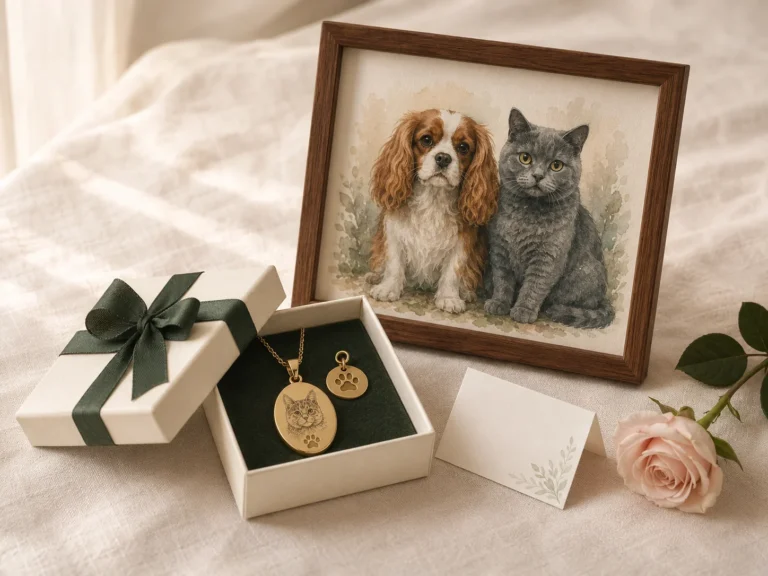
Losing a dog or cat leaves an absence that can be difficult to put into words. The right memorial cannot remove that grief, but it can preserve something precious: a familiar face, a name spoken with love, a paw print, or a memory that still brings a smile.
Pet memorial gifts are keepsakes, artworks, jewelry, and living tributes created to honor the life and memory of a beloved companion. Some are designed to be worn or displayed, while others hold a photo, collar, ashes, or another small reminder. The most meaningful choice is not necessarily the most elaborate one—it is the one that feels true to the bond being remembered.
What Are Pet Memorial Gifts?
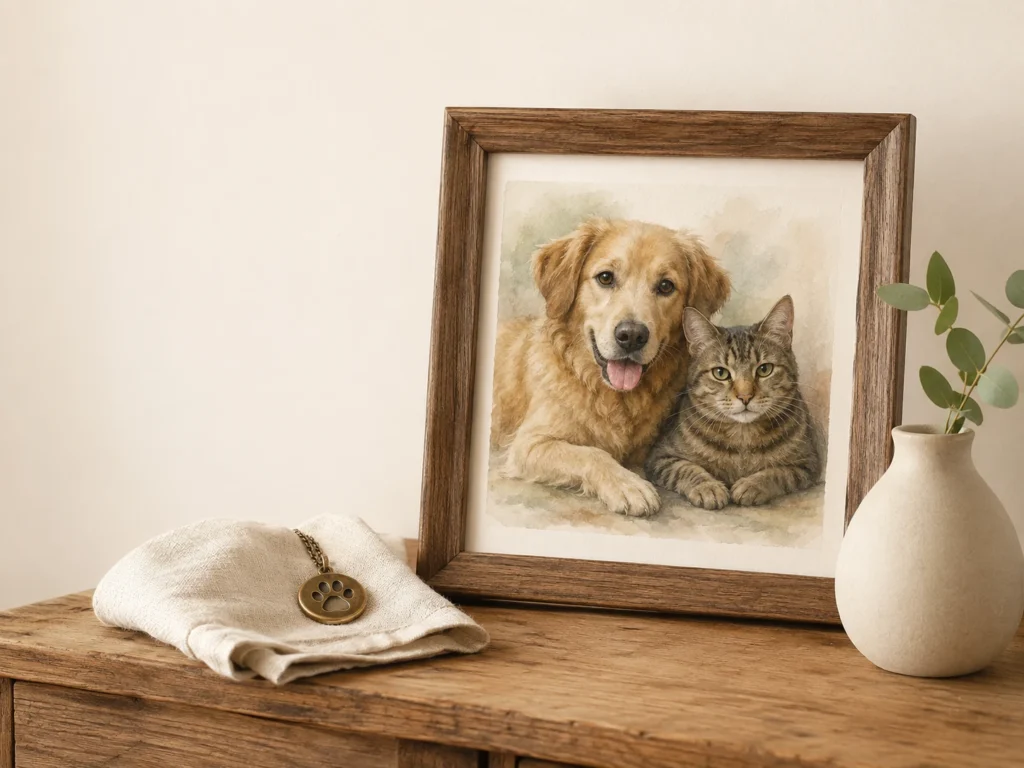
Pet memorial gifts are objects or gestures that help preserve the memory of a pet after they have died. They may feature a pet’s portrait, name, dates, paw print, or a few words that reflect the relationship they shared with their family. Some memorials can also hold a small amount of ashes, fur, a collar tag, or another keepsake.
They can be chosen by a grieving owner for their own home, given as a thoughtful pet sympathy gift, or shared among family members who loved the same animal. Although they are often called gifts, their real purpose is remembrance: creating a gentle, lasting place for love that still remains.
Why Can a Memorial Feel So Meaningful?
For many people, a pet is part of the rhythm of everyday life—the footsteps at the door, the favorite place by the window, the walk taken at the same time each morning. When that presence is gone, small routines can suddenly feel very quiet.
A memorial gives those memories a visible or tangible home. It can acknowledge that the relationship mattered, offer a way to share stories, and help someone remember the whole life of their pet rather than only the final days.
There is no single correct way or timetable for grieving. The American Veterinary Medical Association notes that the death of a beloved pet can bring grief and intense sorrow, while Cornell University’s pet loss resources offer several forms of bereavement support.
A memorial should therefore never be treated as a way to “move on” quickly. It is simply one possible way to carry the love forward.
Meaningful Pet Memorial Gifts for Dogs and Cats
Different memorials preserve different parts of a pet’s story. Before choosing one, consider what the owner most wants to keep close: the pet’s face, name, physical keepsakes, personality, or the feeling of companionship.
| Type of memorial | What it preserves | Especially meaningful for |
|---|---|---|
| Custom pet portrait | A pet’s face, expression, and personality | Displaying a favorite image as art |
| Memorial jewelry | A name, portrait, paw print, photo, or ashes | Keeping a discreet reminder close |
| Photo frame or album | Everyday moments and shared experiences | Families with many treasured photos |
| Keepsake box or urn | Ashes, tags, collars, fur, letters, or belongings | Keeping physical mementos together |
| Paw- or nose-print keepsake | A detail unique to the individual pet | Preserving a deeply personal mark |
| Garden memorial | A peaceful outdoor place of remembrance | Pets who loved the garden or outdoors |
| Soft Memorial Keepsakes | A familiar image or shape in a soft, huggable form | People who miss their pet’s physical presence |
| Living tribute or donation | Love extended to plants, animals, or a community | Honoring a pet through continuing care |
1. Custom Pet Portraits
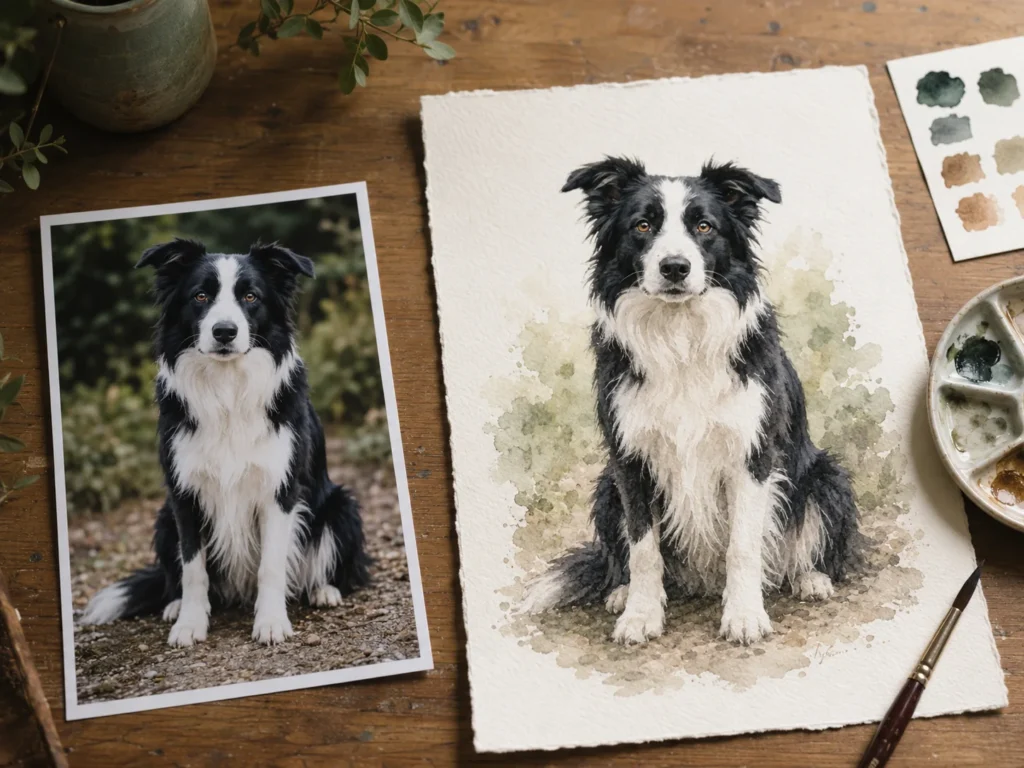
A custom portrait turns a familiar photograph into artwork that can remain part of the home. It may capture bright eyes, a tilted head, a favorite sleeping pose, or another detail instantly recognizable to the people who loved the pet.
Watercolor portraits often feel soft and reflective, while realistic hand-painted portraits preserve more precise features. A portrait can include the pet’s name, dates, or a short message, but it does not need many words. Sometimes the expression itself says enough.
2. Pet Memorial Jewelry
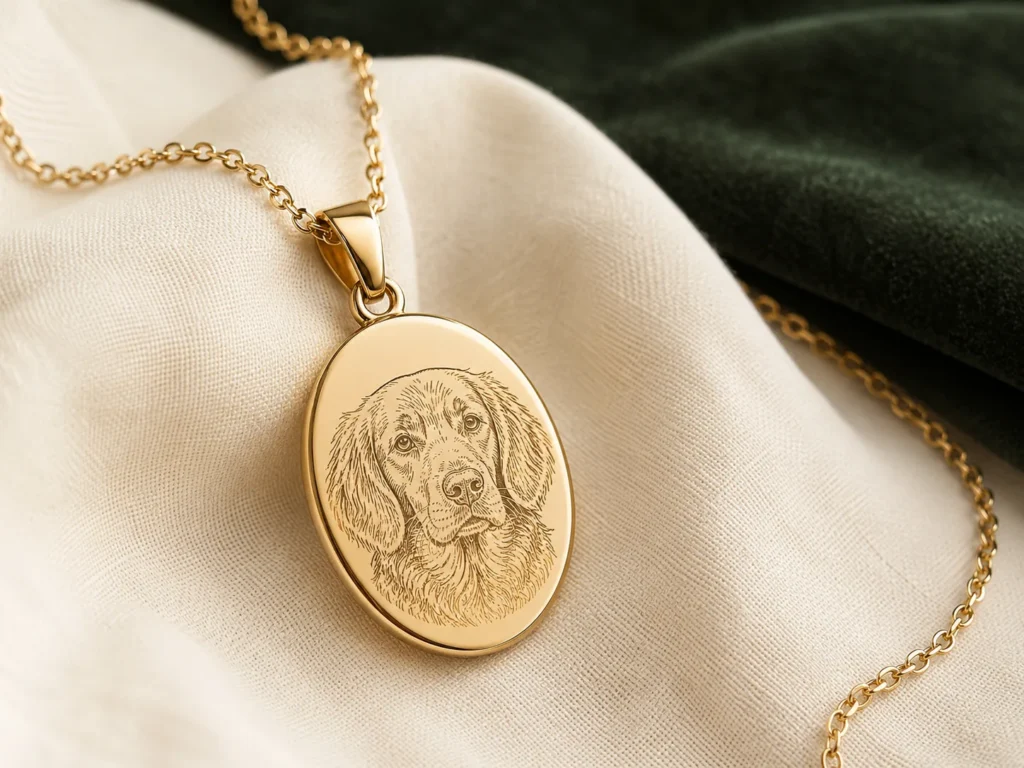
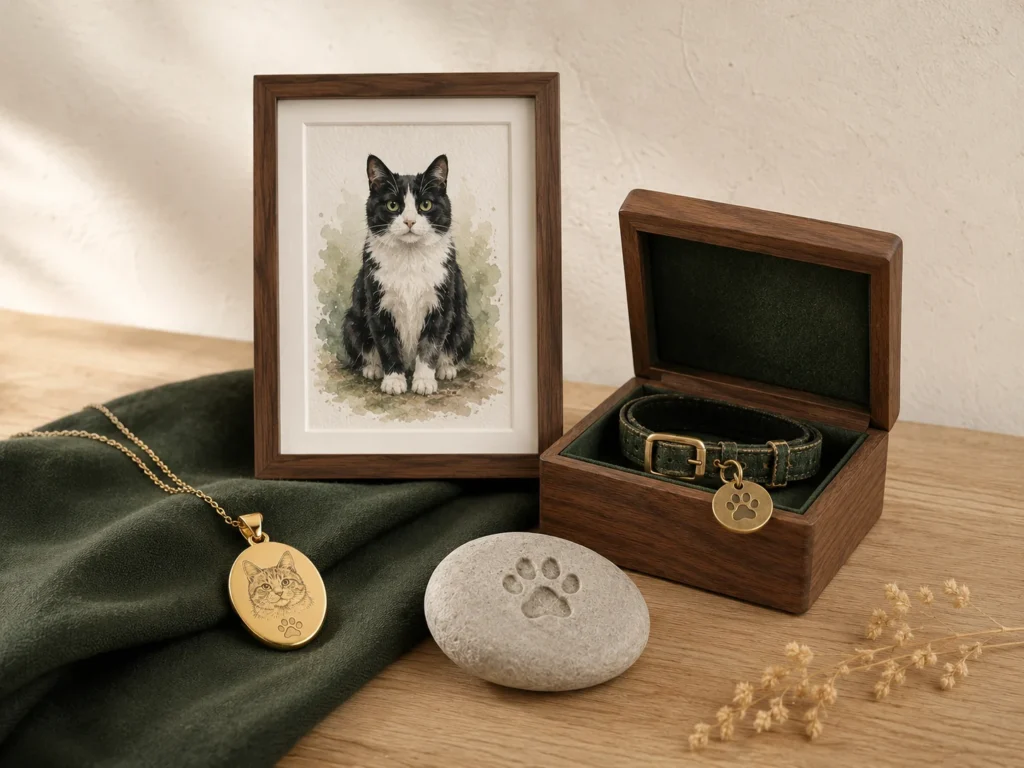
Memorial jewelry is a private, wearable way to keep a pet’s memory nearby. Common designs include engraved name necklaces, paw-print pendants, portrait necklaces, photo projection jewelry, and small urn necklaces made to hold a symbolic amount of ashes or fur.
When choosing jewelry, consider whether the recipient normally wears necklaces or bracelets, whether they prefer subtle or visible designs, and whether the metal and chain are suitable for regular wear. Personalization should be accurate and restrained so the finished piece feels timeless rather than crowded.
3. Photo Frames and Memory Albums
A favorite photograph can bring back an entire moment: a muddy walk, a sunny afternoon, or the way a cat always curled up in the same chair. A personalized frame gives one image a special place, while a photo album can tell a fuller story across many years.
Families may also add handwritten captions, adoption-day memories, funny habits, or notes from different family members. These details make the memorial about the pet’s life, not only their loss.
4. Keepsake Boxes and Memorial Urns
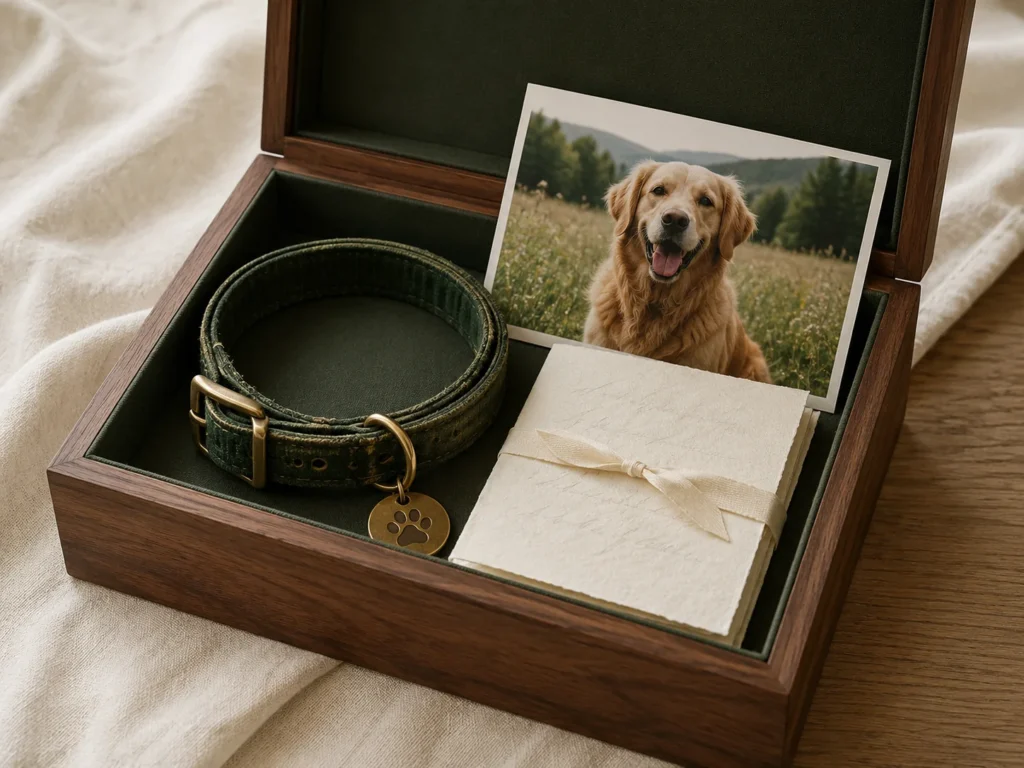
A keepsake box offers one place for the objects that may feel too meaningful to put away: a collar, tag, favorite toy, sympathy cards, a clipping of fur, or printed photographs. A personalized urn can hold ashes while displaying a name, portrait, or simple inscription.
Before ordering, check dimensions carefully and confirm whether the item is designed for ashes, general keepsakes, or both. If ashes will be placed inside, secure construction and clear capacity information matter more than decorative details.
5. Paw-Print and Nose-Print Keepsakes
A paw or nose print belongs to one pet alone, which makes it especially personal. Prints can be engraved on jewelry, placed in a frame, pressed into clay, or incorporated into a small ornament.
If an original print is available, use a clear, high-resolution scan or photograph. If it is not, a simple paw symbol can still be meaningful, but it should not be presented as the pet’s exact print.
6. Garden Stones and Living Memorials
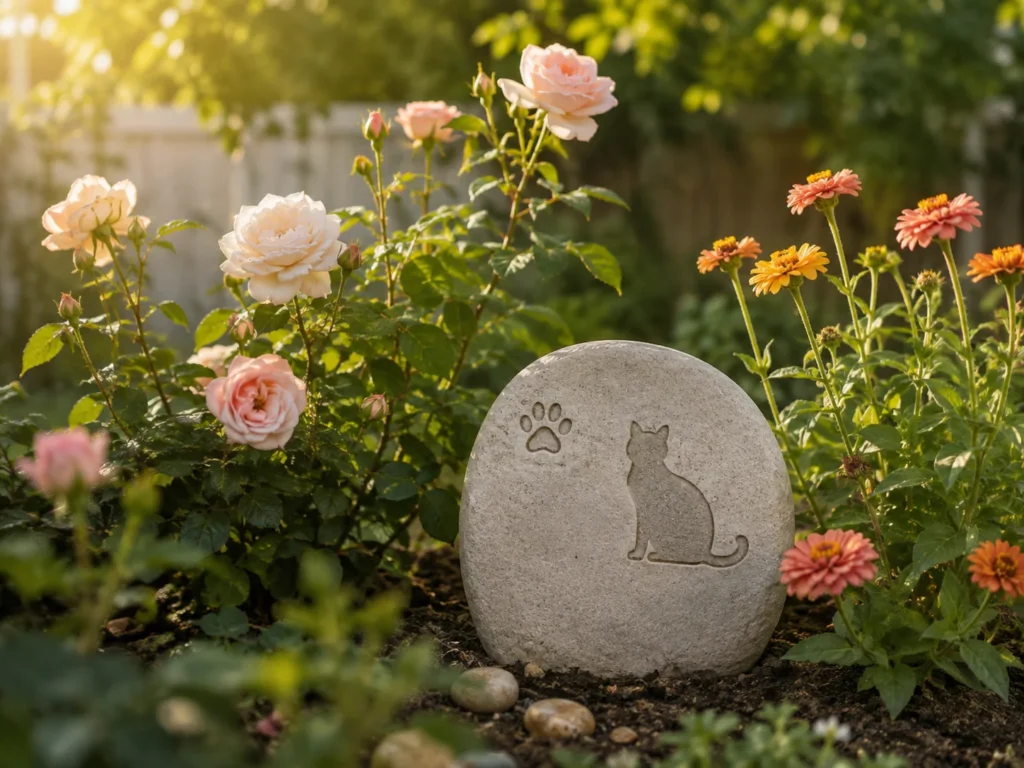
For a dog who loved lying in the sun or a cat who watched the garden from a window, an outdoor tribute can feel especially fitting. A memorial stone, engraved marker, flowering plant, or tree can create a quiet place to pause and remember.
Choose a plant that suits the local climate and household. If the recipient rents or may move, a potted plant or smaller garden marker may be more practical than a permanent installation.
7.Soft Memorial Keepsakes
Custom pillows, blankets, and other soft fabric keepsakes can reproduce a favorite photo or familiar outline. They may range from simple photo cushions and blankets to playful shaped pillows or larger, more lifelike designs. These gifts can be comforting for someone who deeply misses seeing their pet at home, but they are also very personal.
If choosing one for someone else, consider whether a lifelike image would feel comforting or overwhelming. When uncertain, a more subtle design may be the gentler choice.
8. Memorial Donations and Acts of Kindness
Not every meaningful memorial is a physical object. A memorial donation to an animal shelter, veterinary program, rescue group, or cause connected to the pet can extend that animal’s memory into care for others.
Families may also volunteer, foster an animal when they are ready, create a small annual tradition, or help another pet in the loved one’s name. This can stand alone or accompany a modest keepsake and handwritten card.
How to Choose the Right Pet Memorial Gift
The best pet memorial gifts reflect the individual pet and the person remembering them. Use the following questions to narrow the choice.
What Part of the Pet’s Memory Matters Most?
If the owner often talks about the pet’s expressive face, consider a portrait. If they saved the collar and tag, a keepsake box may feel natural. If they want something private and close, memorial jewelry may be more appropriate.
Begin with the memory, not the product.
Will It Be Worn, Displayed, Held, or Planted?
Think about the recipient’s everyday life. Someone who rarely wears jewelry may appreciate framed artwork more. A person with limited space may prefer a small pendant or ornament.
A garden memorial suits someone with a stable outdoor space, while a portable keepsake may be better for a renter or frequent traveler.
Is the Personalization Accurate?
Check the spelling of the pet’s name, dates, portrait orientation, engraving, and uploaded image before ordering. When giving a gift, avoid adding a death date unless you are certain it is correct and know the recipient would want it included.
Does the Design Reflect the Pet’s Personality?
Dog memorial gifts and cat memorial gifts do not need to follow rigid designs. A playful dog may be best remembered through an image from a favorite adventure; a quiet cat may be captured in a familiar resting place.
The pet’s habits, expression, and relationship with the owner matter more than species-themed decoration.
Is the Quality Appropriate for Long-Term Keeping?
Look for clear material descriptions, readable personalization, secure closures, realistic production times, and care instructions.
For custom artwork, check what photo quality is required and whether a proof or revision process is available. A memorial is intended to last, so clarity and craftsmanship matter.
Choosing a Gift for Someone Who Has Lost a Pet
When giving a memorial to someone else, the most important message is simple: their pet was loved, their loss is real, and they do not have to hide their grief.
You do not need to find a perfect phrase or an elaborate present. Use the pet’s name if you know it, choose a gift that suits the person’s style, and include a short, sincere note. For example:
I’m so sorry for the loss of [Pet’s Name]. They were deeply loved and brought so much joy to your life. I hope this keepsake brings comfort and helps you hold the happy memories close.
Avoid telling someone to replace the pet, “look on the bright side,” or stop feeling sad.
If the loss is very recent and you are unsure what they would want, a card, flowers, meal, or donation may be more appropriate first; a personalized memorial can be given later.
How to Make a Memorial More Personal
Personalization is most meaningful when it captures identity rather than filling every available space. Consider including one or two of the following:
- The pet’s name or nickname
- A clear favorite photograph
- An actual paw or nose print
- Adoption and memorial dates
- A short phrase used by the family
- A collar color, flower, toy, or symbol connected to the pet
- A brief memory of a habit or shared routine
For portrait-based products, choose a well-lit image in which the pet’s face and eyes are clear. Avoid screenshots, heavy filters, and photographs where important features are cropped or hidden.
If only an older or imperfect photo exists, ask the maker whether it can be used before placing the order.
Creating a Tribute Beyond a Physical Gift
A keepsake can become even more meaningful when it is connected to a small act of remembrance. You might:
- Place it beside a favorite photograph
- Write down one memory each family member wants to preserve
- Light a candle on the pet’s adoption day
- Visit a favorite walking place
- Plant flowers that return each year
- Create a digital album for distant family members
- Donate food, supplies, or funds in the pet’s name
There is no need to complete a memorial immediately. Some people know at once what they want to keep; others need weeks or months before they are ready to choose. Both responses are valid.
A Memorial Should Feel Like the Pet It Honors
The most meaningful memorial is not defined by price or size. It may be a hand-painted portrait in the living room, a small engraved pendant worn close to the heart, a collar kept safely in a box, or a tree that flowers each spring.
What matters is that it reflects a real life and a real relationship. Thoughtfully chosen pet memorial gifts give love a place to remain—quietly, personally, and in a form that can be returned to whenever the memory is needed.
At The Ever Paw, we create personalized keepsakes designed around the details that made each companion unforgettable. Explore our personalized pet memorial gifts to find a tribute that feels true to your dog or cat and the life you shared.
FAQ: About Pet Memorial Gifts
What Is a Thoughtful Gift for Someone Who Lost a Pet?
A thoughtful gift acknowledges the loss without trying to fix it. A personalized portrait, engraved keepsake, photo frame, memorial jewelry, donation, or handwritten card can all be appropriate.
Choose according to the recipient’s personality and relationship with the pet.
When Should You Give a Pet Memorial Gift?
There is no fixed rule. A simple card or practical gesture may be best immediately after the loss, while a personalized keepsake can be given days, weeks, or even months later.
Anniversaries, birthdays, and holidays can also be meaningful times, provided the gesture is gentle and private.
What Can Be Personalized on a Pet Memorial Gift?
Common options include the pet’s name, portrait, photo, paw print, nose print, dates, and a short message. Use only details you know are accurate, and avoid overcrowding the design.
Are Memorial Gifts Different for Dogs and Cats?
The main categories are similar, but the best design should reflect the individual animal. Choose images, colors, symbols, and memories connected to that particular dog or cat rather than relying only on generic species motifs.
Can Pet Memorial Jewelry Hold Ashes or Fur?
Some memorial necklaces and bracelets contain a small sealed compartment designed for a symbolic amount of ashes or fur; others are decorative only.
Always check the product description, capacity, closure method, and care instructions before ordering.
What If I Do Not Know What Kind of Memorial the Person Would Want?
Choose something flexible and understated, such as a sympathy card, donation, flowers, or a simple photo frame. You can also wait and ask gently later.
A memorial should support the grieving person, not create pressure to display or use something they did not choose.